
Welcome back to everyone that has returned after the Easter holidays. As I am writing this, the sun is shining, and everything feels so much better in the sun.
The start of a new term ……. another new beginning.
When we shared a class in the PRU, Claire and I always started the new term by working with the children on our class rules and expectations. We talked about what we all wanted our class to be like and agreed how we would try to achieve this. We then had a common goal and knew what was expected of us all. Consistency was then easier to achieve, and all children knew how we as adults would respond to them and how we wanted them to respond to us and the other children. When things are predictable and consistent, children feel safe; they may still test the boundaries, but they know (and expect) the responses to be the same each time.
It seems appropriate for us to start this new term by reflecting on our Reach Values – starting with why we chose them and what they mean to us regarding our work.




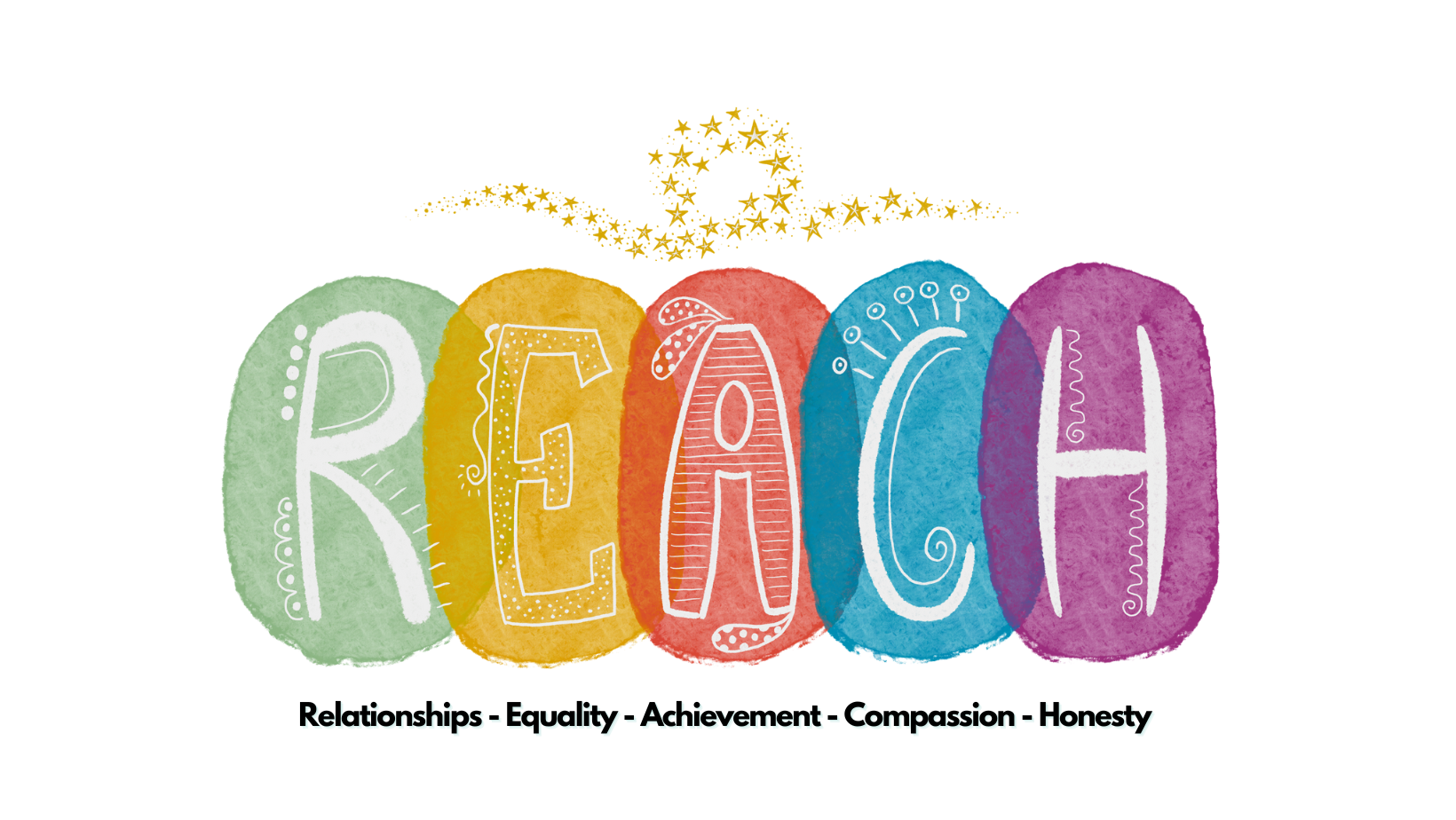

We believe that everything we do as educators in schools comes back to the relationships that we develop in our classrooms. Positive, trusting relationships help children feel safe and secure which enables us, as adults, to teach them new skills, academically, socially, and emotionally. Positive relationships form a firm foundation which enables children to develop resilience, accept constructive criticism and open their mind to new experiences. Laughter and fun are built in to everyday situations but also children know who to go to if they feel unsure or upset. If children feel liked and listened to, they are more likely to engage in school life in a positive way.

We want all children to be treated as equals and we want them to treat others as equals. To do this, we need to model this belief within our classrooms and within the work we do. Show children that we value their opinion and help them listen to others. Teach them how to respectfully disagree with each other without falling out. For those children who are struggling to access the curriculum, work with them to help them – adapt your practice to meet their needs where possible; be creative. We should all have the opportunity to try to achieve our dreams and should help others to achieve theirs.

We all want to achieve different things in life. Everyone is different and our hopes and wishes should be respected. Some of us aim to be a brain surgeon, some of us aim to work outside gardening, some of us want to be a car mechanic, some of us want to run a marathon, some of us want to learn to swim. It does not matter what we want to achieve in life, as long as we are thoughtful and respectful of others along the way. I can remember being at school and my headteacher talked about a child he had taught who wanted to paint the white lines in the middle of the road when he got older. He worked hard, achieved his goal, and got his dream job. We need brain surgeons, and we need electricians, and we also need people who paint white lines in the middle of the road. Help children find their dream.

Treat people with kindness. Always treat others the way you want to be treated yourself. Teaching children to think of others (even those who find this really difficult) helps create harmony and a sense of group belonging. We believe children should be treated with compassion and kindness. As adults if we take time to understand the children we teach, we will see the good and find the spark that makes them tick. Sometimes previous experiences result in angry children who argue and fight back but take time to get to know them and imagine how they may be feeling, and you will find that a child who may be confused, frustrated, lonely, worried, anxious is underneath all those angry behaviours. Work with the child to help them understand and regulate their emotions.

Teaching children to be honest is so important. If children learn to be honest, they learn to accept responsibility for their own actions and adults around them are able to help them learn from their mistakes and respond differently in the future. Be honest with children so they are able to trust you. Be truthful and they will believe you will do what you say so, again they will form a trusting relationship with you.

 Reach Behaviour